
This winter HVAC checklist takes about ten minutes and can save Toronto homeowners a February breakdown. By late January, your heating system has already been running hard for weeks. That’s exactly why a quick “comfort check” now can help you avoid those frustrating surprise issues that seem to pop up at the worst time, during the coldest stretch, on the busiest service days.
The 10-Minute Winter HVAC Checklist at a Glance
Work through this winter HVAC checklist in one pass: set the thermostat 2°C above room temperature and confirm the furnace fires, listen for new rattles or squeals, check the filter against a light, make sure supply vents are open and unblocked, glance at the exhaust pipes outside for ice or snow, and test your carbon monoxide alarm. Ten minutes, no tools, real peace of mind.
This guide is designed for homeowners who want a simple, practical way to confirm their system is operating safely and efficiently, without overthinking it.
What Usually Fails in Late January (Common Symptoms, Not Scare Tactics)
Most winter heating issues don’t happen “out of nowhere.” They usually show warning signs first, and those signs tend to show up more often in late January and February because the system is under sustained load.
Watch for:
- Uneven heating (some rooms are consistently colder than others)
- Long run times or the system cycling on and off more than usual
- New noises (rattling, banging, whistling, vibrating)
- Dry air symptoms (static shocks, sore throat, itchy skin, cracking wood)
- Weak airflow from supply vents
- Higher than normal utility bills without a clear reason
- Heat pump icing or constant defrost behaviour that seems excessive
If any of these sound familiar, the checklist below helps you narrow down whether it’s a simple fix or a good time to call a technician.
The 10-Minute Homeowner Checklist
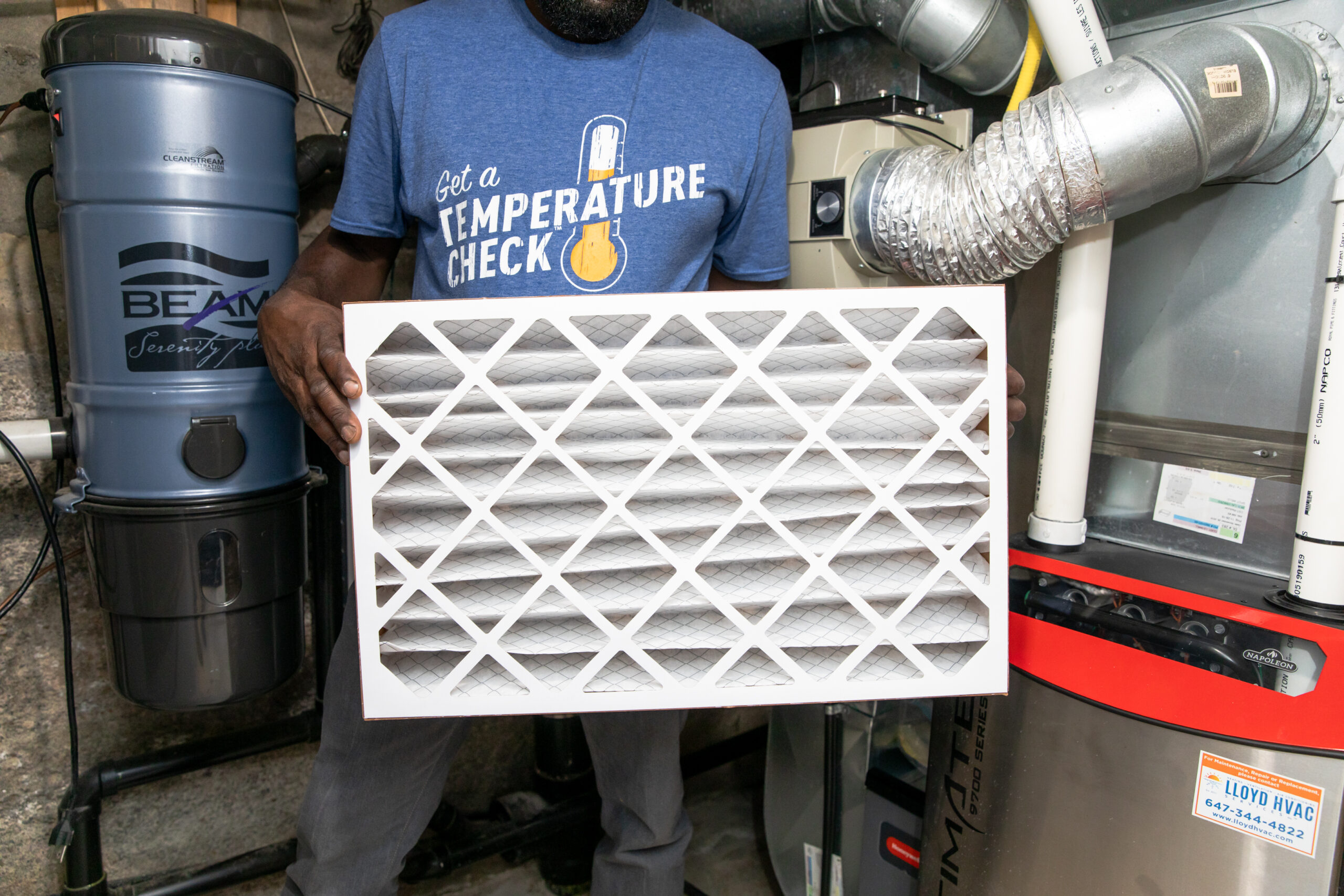
1) Check your furnace filter (1 minute)
A clogged filter is one of the most common causes of airflow problems, comfort issues, and higher energy use.
- If it looks dusty/grey or feels packed, replace it.
- If you’re unsure of the size or type, snap a photo before you remove it.
Rule of thumb: In heavy heating season, many homes need a filter change every 1–3 months depending on pets, dust, and filter type.
2) Walk the vents and returns (2 minutes)
Your system can’t heat properly if it can’t breathe.
- Make sure supply vents are open and not blocked by furniture or rugs.
- Make sure return air grilles are not blocked (returns are just as important as supply vents).
3) Confirm thermostat settings (1 minute)
A quick check prevents a lot of confusion.
- Confirm the thermostat is set to Heat (not Auto/Off).
- If you use schedules, confirm the schedule isn’t fighting your comfort needs.
- If you have a heat pump, avoid large temperature “jumps” that may trigger backup heat unnecessarily (depends on setup).
4) Listen for “new” sounds (1 minute)
Stand near the furnace/air handler and listen during a run cycle.
- Normal: steady fan noise, gentle ignition, consistent airflow
- Worth checking: rattling panels, whistling (often airflow restriction), banging (can be duct expansion or mechanical), loud vibration
5) Quick visual check around the furnace/utility room (1 minute)
- Keep the area around the equipment clear.
- Look for any water on the floor around the furnace or humidifier.
- If you see moisture where it shouldn’t be, it’s worth investigating early.
6) Condensate drain check (2 minutes)
High efficiency furnaces and many heat pump systems drain water through a condensate line.
- Check for slow dripping, pooling water, or dampness
- If the drain looks blocked or you see water collecting, that’s a strong signal to book service before it becomes a shutdown.
7) Heat pump outdoor unit clearance (2 minutes)
If you have a heat pump, the outdoor unit needs airflow.
- Clear snow and debris from around the unit.
- Keep at least 18–24 inches of clearance around the sides (more is even better if possible).
- Light frost can be normal, but thick ice buildup is not.
When to Call a Pro (Simple Decision Tree)
Use this to decide quickly:
Call a technician soon if you notice:
- System won’t maintain temperature
- Weak airflow from multiple vents
- New or worsening noises
- Water around the unit or leaking
- Burning smell that persists after a short run
- Heat pump icing that doesn’t clear properly
- Short cycling (turning on and off repeatedly)
- Your bills jumped and nothing else changed
Book a tune up even if everything “seems fine” if:
- It’s been 12+ months since the last professional maintenance
- You have a high efficiency furnace or heat pump (small issues can become bigger under winter load)
- You’re noticing comfort complaints (cold rooms, dry air, stuffy air)
Why Preventive Maintenance Pays (Even Late in the Season)
A winter tune-up isn’t just about avoiding breakdowns. It’s about keeping performance steady when your system is doing the most work.
Preventive maintenance helps with:
- Lower operating costs (airflow and combustion performance matter)
- More consistent comfort (better heat delivery, fewer cold spots)
- Longer equipment life (reduced strain and early issue detection)
- Warranty readiness (many manufacturers expect routine maintenance documentation)
Late January is a smart time because you still have the toughest stretch of winter ahead, and you’re catching issues before they force urgent repair calls.
Ready for a Winter Tune Up?
If you want peace of mind before the next cold stretch, we can help. Book a winter check before the next cold snap!
👉 Season’s Pass Maintenance Plan holders: Schedule your included visit
👉 Past customers: Request a filter change plus an inspection appointment
Further reading: Natural Resources Canada’s energy efficiency resources.
Pin this winter HVAC checklist to the furnace-room door — a winter HVAC checklist only works if you actually run it.
Run this winter HVAC checklist once in late January and again in early March — and if anything on it fails, Call Lloyd HVAC at (647) 344-4822 — we answer 7 AM to 9 PM, seven days a week.
Related HVAC Services in Toronto
Need a hand from a licensed technician? Lloyd HVAC Services helps homeowners across Toronto and the GTA with: